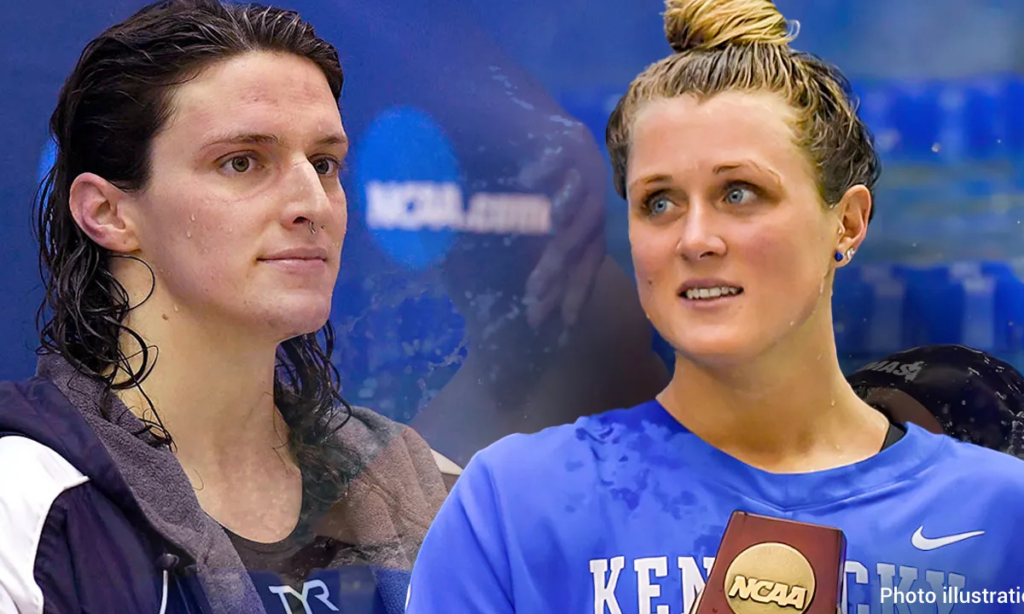
NCAA Drama: Lia Thomas’ Medals Taken Away, Riley Gaines Named New Champion!
The NCAA swimming world recently faced one of its most debated moments. Lia Thomas, a transgender swimmer who once made history as the first to win an NCAA Division I Championship, lost all her medals. These medals were awarded to Riley Gaines, a former NCAA swimmer and outspoken critic of transgender athletes in women’s sports. This surprising decision has reignited debates about fairness and inclusion in competitive sports.

Lia Thomas had previously competed as a male swimmer in college before transitioning and joining the women’s competitions. Her victories sparked discussions about the fairness of allowing transgender athletes to compete against cisgender women. Many questioned whether biological differences created an advantage. Despite her success, Thomas remained at the center of this controversy.
After a thorough review of NCAA rules and under pressure from legal and political forces, the organization decided to revoke Thomas’ medals. Officials stated that Thomas’ eligibility didn’t align with updated, stricter rules aimed at ensuring fair competition. These changes were meant to prevent perceived advantages transgender women might have over cisgender athletes. As a result, Thomas lost the medals she had previously won at NCAA championships.

In a dramatic twist, the NCAA awarded these medals to Riley Gaines. Gaines, a competitive swimmer from the University of Kentucky and an NCAA All-American, had consistently spoken out against transgender athletes competing in women’s sports. She argued that biological differences gave transgender women an unfair edge. Gaines had previously competed against Thomas and publicly expressed concerns after losing to her at an NCAA event.
By receiving Thomas’ medals, Gaines has become a symbol of the push for “fairness in women’s sports.” She and her supporters argue that transgender athletes’ inclusion can disadvantage cisgender women. Gaines has pledged to continue advocating for policies that protect the rights of cisgender women in athletics.
The NCAA’s decision to strip Thomas of her medals marks a significant moment, not just in swimming but in the wider debate about transgender inclusion in sports. Critics of transgender athletes in women’s sports claim that biological differences create unfair competition. Supporters of inclusion, however, emphasize the importance of equality and support for minority groups.

These events have raised questions about the future of sports and how to balance fairness with inclusion. Some experts suggest creating new competition categories or stricter guidelines to ensure equal opportunities for all athletes. Others argue that society’s understanding and acceptance of transgender athletes must evolve to address these challenges.
The controversy surrounding Lia Thomas and Riley Gaines highlights the ongoing struggle to define fairness in sports. As more transgender athletes compete, sports organizations may need to create clearer, more inclusive policies. The NCAA’s decision has set the stage for future debates, ensuring that these issues remain a central topic in both sports and society.
The story of Lia Thomas and Riley Gaines reflects the complexities of this issue. While the medals have changed hands, the larger questions about fairness, inclusion, and equality in sports remain unanswered. The impact of these debates will shape not just swimming but the future of competitive sports as a whole.
Related Posts
-
 83 Years Old Al Pacino Welcomes Baby Boy with 29 Years Old Girlfriend
-
 Reese Witherspoon Divorces With Husband Who Has Changed after Almost $1 billion Dollar Deal – Source Claims
-
 Fox News Contributor Dr Kelly Powers Dies at 45, Leaving Behind Her 3-Year-Old Child
-
 Hollywood divided over Israel-Palestine War!
About The Author